Should Mequon Home Buyers Add a Radon Test to Their Inspection?
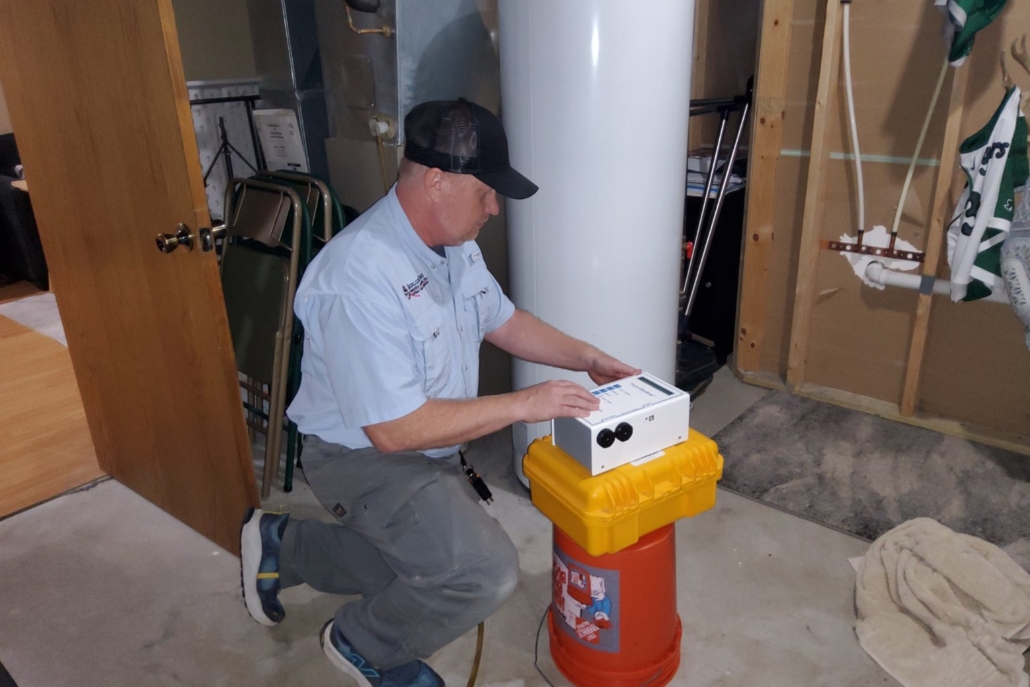
Adding radon testing in Mequon gives a home buyer information that a visual home inspection cannot provide. Radon has no color or odor, so the condition of the foundation, basement, or ventilation system cannot reveal the home’s radon level.
The Wisconsin Department of Health Services recommends testing during real estate transactions, and the U.S. Environmental Protection Agency recommends action to reduce radon when a result is 4 picocuries per liter or higher. Sherlock Inspection Services offers a 48-hour radon test, with the result available at the end of the testing period.
Why a home inspection cannot determine the radon level
A home inspection and a radon test answer different questions. The inspection examines visible and accessible components such as the foundation, electrical system, plumbing, heating equipment, roof, attic, windows, and exterior drainage. A radon test measures the concentration of radon in the indoor air over a defined period.
Radon is a radioactive gas produced by the natural breakdown of uranium in the ground. It can enter through foundation cracks, floor joints, sump openings, utility penetrations, and other paths between the soil and the building. A sealed-looking basement does not establish that the level is low, and a visible foundation crack does not establish that it is high.
Testing is therefore useful even when the basement is dry and the foundation appears sound. It is also relevant in a newer house with radon-resistant construction features because the EPA advises buyers to confirm that the home has actually been tested.
What a 48-hour radon test measures
A 48-hour radon test measures the concentration of radon in the air during the testing period. Results are reported in picocuries per liter, abbreviated pCi/L, which is a unit used to describe radioactive activity in a liter of air.
The result is not a pass-or-fail grade for the property. It is a measurement that the buyer can compare with current public-health guidance and discuss with the appropriate professionals. The EPA recommends taking action to reduce the level when a test result is 4 pCi/L or higher. The agency also states that levels below 4 pCi/L still carry some risk.
A short-term measurement is suited to the limited timing of a home purchase, but it does not predict the exact concentration for every future day. Radon can vary with weather, season, soil conditions, ventilation, and how the home is operated.
Where the test belongs in a Mequon home
Real-estate testing belongs on the lowest level the buyer could use regularly as living space. EPA guidance applies this placement whether that level is finished or unfinished, so an unfinished basement is not automatically excluded.
For example, a Mequon house may have a finished lower-level family room and an adjacent mechanical area. Another property may have an unfinished basement that could be used regularly for exercise, hobbies, or a future recreation room. The tester evaluates the layout and selects an appropriate location rather than placing the device in a bathroom, kitchen, laundry room, crawlspace, direct sunlight, or an area affected by a nearby exterior opening.
Placement matters because a main-floor result does not answer the same question when a lower level could be occupied. If the layout creates an unclear edge case, the qualified tester should determine the location using the real-estate testing guidance.
How closed-house conditions protect the result
Closed-house conditions help make a short-term result usable. For a test lasting two to four days, EPA and Wisconsin guidance call for exterior windows and doors to remain closed for at least 12 hours before testing and throughout the test, apart from normal entry and exit.
The heating and cooling system can operate normally. Actions that bring large amounts of outside air into the house, such as leaving basement windows open or continuously running a whole-house fan, can change the indoor concentration. The test device also needs to remain in place and undisturbed.
Occupants do not have to leave the property. They can use exterior doors normally, live in the home, and operate ordinary systems as instructed. If someone moves the device, opens windows for an extended period, or otherwise disrupts the required conditions, the tester may determine that another measurement is needed.
How to review an older radon result
A previous test can be informative, but the number alone is not enough to evaluate it. Buyers should look at where the device was placed, when the measurement occurred, how long it ran, who performed it, and whether the required testing conditions were maintained.
A result from an upstairs bedroom may not represent a basement that could be used as living space. A measurement completed before a foundation renovation, window replacement, heating-system change, or radon mitigation installation may not describe the home’s present condition. Wisconsin guidance also recommends documentation when a homeowner conducted the earlier test.
If the property has an active radon-reduction system, the system should be operating during the measurement. The buyer can also review any available installation information and post-mitigation test result, while recognizing that a current test is the only way to measure the present indoor level.
What the result means for the buyer
A result at or above 4 pCi/L reaches the EPA level at which the agency recommends taking action to reduce radon. The appropriate follow-up is an evaluation by a qualified radon mitigation professional, who can assess the foundation type and building layout and explain suitable reduction options.
A result below 4 pCi/L does not guarantee that the home is free of radon or that the concentration will never change. The EPA notes that no radon exposure is entirely risk-free, while a short-term real-estate test captures a limited period rather than a year-round average. For results between 2 and 4 pCi/L, the EPA recommends considering radon reduction, and the Wisconsin Department of Health Services provides guidance on follow-up testing after an elevated result.
Results close to 4 pCi/L require especially careful interpretation because short-term levels can fluctuate around that point. The buyer can use the measured value, testing conditions, property layout, and current EPA guidance when discussing next steps with a radon professional. The final property and transaction decisions remain with the buyer and the buyer’s chosen advisers.
When the radon test should be arranged
Radon testing should be arranged early enough for the full measurement period to fit within the inspection timeline. Sherlock Inspection Services’ radon tests run for 48 hours, and the result becomes available at the end of that period.
That timing is separate from the home inspection itself. A home inspection usually takes two to three hours, and Sherlock provides the inspection report the same day or the next morning. The radon result follows its own testing schedule and should not be confused with the inspection report turnaround.
Early coordination is particularly important when the home is occupied, because the occupants need instructions about closed-house conditions before the device is placed. It also gives the inspector time to evaluate the lowest usable level, including a finished recreation room, an unfinished basement, or a lower-level bedroom.
What happens if the result is elevated
An elevated result identifies the need for specialist evaluation; it does not tell the buyer that the entire property is defective. Radon is an indoor-air condition, and its presence does not mean the roof, wiring, plumbing, furnace, or foundation has failed.
The next professional is a qualified radon mitigation contractor. That contractor evaluates the house and determines which reduction approach fits its construction. A slab-on-grade property, a basement with a sump system, and a house with a crawlspace may require different evaluations.
The home inspector should remain independent from the repair decision. Sherlock Inspection Services examines and reports on homes but does not perform repairs on properties it inspects. This separation allows the test result to stand as an independent measurement rather than an opportunity to sell corrective work.
Radon testing with Sherlock Inspection Services
Sherlock Inspection Services provides home inspections, condo inspections, and radon testing for buyers in Mequon and across southeastern Wisconsin. Buyers are encouraged to attend the full inspection so they can see visible conditions, ask questions, and understand how the written findings relate to the house.
Sherlock is a Wisconsin state-licensed home inspector, license number 2042-106, an American Home Inspectors Training certified inspector, a Wisconsin Association of Home Inspectors member, and a BBB Accredited Business. Radon testing remains a separate measurement from the visual inspection, with its own 48-hour period and result.
Buyers who want to understand the broader inspection process can review what the inspection covers. The goal is a clear record of observed property conditions alongside a measured radon result, without treating either as a guarantee of future performance.
For a Mequon inspection that includes a measured indoor radon result, Schedule an inspection.
Frequently Asked Questions
Is radon testing required when buying a home in Wisconsin?
Wisconsin law does not require or regulate radon testing during a home sale, but the Wisconsin Department of Health Services recommends testing during real estate transactions. The state also says sellers must inform buyers of known unsafe radon levels. A buyer who wants a current measurement should arrange the test early enough to complete the required testing period.
Does a newly built Mequon home still need a radon test?
A newer home can still have an elevated indoor radon level. Even when radon-resistant construction features are present, the EPA advises buyers to ask whether the home has been tested. Passive piping alone does not provide a current air measurement, and testing shows how the completed building is performing.
Can people stay in the house during a 48-hour radon test?
Yes. Occupants can remain in the home, enter and leave normally, and run the heating or cooling system as directed. They should avoid leaving exterior windows or doors open, moving the device, or operating equipment that continuously pulls outside air into the house.
Will the radon result arrive with the home inspection report?
Not necessarily. Sherlock Inspection Services provides the home inspection report the same day or the next morning, while its radon test runs for 48 hours and produces a result at the end of that period. These are separate deliverables with different completion times.
Can a neighbor’s low radon result show that a Mequon house is also low?
No. Wisconsin health officials caution that neighboring homes can have very different concentrations because soil pathways, foundation openings, ventilation, and construction vary from property to property. A result from the house being purchased is needed to understand that specific indoor environment.
Who can answer local radon questions for Ozaukee County?
The Wisconsin Department of Health Services lists the Washington Ozaukee Radon Information Center as the regional public resource serving Ozaukee County. Its trained staff can explain public guidance, testing resources, and how to locate certified measurement or mitigation professionals.


Leave a Reply
Want to join the discussion?Feel free to contribute!